
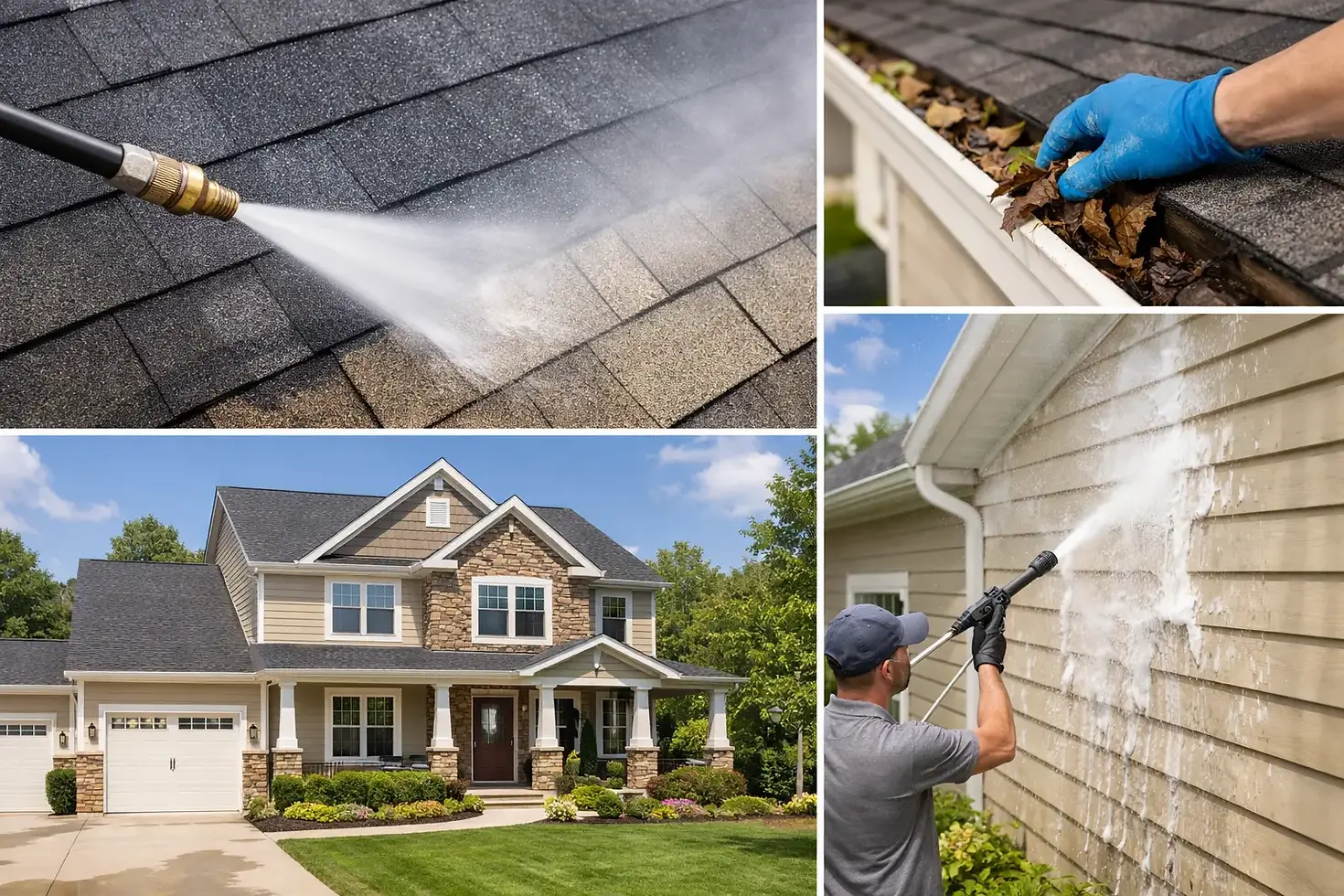
Pressure Washing: What Your Home Actually Needs

A driveway can look permanently stained until the right cleaning method lifts years of tire marks, algae, and surface grime. That is where pressure washing earns its place. Used correctly, it can make concrete, pavers, and other durable exterior surfaces look dramatically better without replacing them. Used carelessly, it can scar wood, damage siding, force water behind trim, and create problems that cost more than a cleaning.
For homeowners, property managers, and HOAs, the goal is not simply to make every surface look bright for a day. The goal is to choose a cleaning method that improves curb appeal while protecting the materials that protect your property. The right approach depends on what is being cleaned, its condition, and what is growing or staining the surface.
Where Pressure Washing Works Best
Pressure washing uses water delivered at high force to remove stuck-on dirt and buildup. It is often the best option for durable, non-delicate surfaces that can handle direct cleaning action. Concrete driveways, sidewalks, patios, retaining walls, some masonry, and certain paver surfaces are common examples.
On these surfaces, the visible difference can be immediate. A clean walkway improves the first impression of a home. Removing slippery algae from exterior paths can also make wet weather less hazardous. For a property being listed for sale, a cleaner driveway and entry area can make the entire exterior feel better maintained before a buyer even steps inside.
Still, high pressure is not a one-setting service. The right pressure, nozzle, distance, cleaning solution, and technique all matter. A contractor who treats every surface the same may leave behind stripes, etched concrete, displaced joint sand, or damaged edges. Professional exterior cleaning should be adjusted to the surface, not rushed through with the strongest possible setting.
When Soft Washing Is the Better Choice
Many exterior surfaces need cleaning but should not be pressure washed. Soft washing uses low-pressure application and appropriate cleaning solutions to treat organic growth such as algae, mildew, moss, and black streaks. The cleaning process is gentler on materials while still addressing the cause of discoloration.
This is especially important for roofing. Asphalt shingles should not be cleaned with high-pressure water. Pressure can loosen protective granules, disturb shingle edges, and reduce the roof's ability to do its job over time. A roof with dark streaks may look like it needs force, but it usually needs the correct treatment and a careful soft-wash process instead.
The same principle applies to painted siding, vinyl siding, trim, screened areas, and many wood surfaces. Water pushed too hard against siding can travel behind panels or into openings around windows and doors. On older homes, where caulk, paint, or trim may already be showing wear, a gentler method is usually the smarter choice.
For homeowners in Dartmouth, Westport, New Bedford, Fall River, Acushnet, Somerset, and surrounding South Coast communities, moisture and seasonal weather create ideal conditions for algae and mildew. The answer is not automatically more pressure. It is choosing the method that removes the growth without shortening the life of the surface beneath it.
Pressure Washing Is Not Just About Appearance
A clean exterior looks cared for, but there is practical value behind the visual improvement. Algae on walkways and patios can become slick. Mildew and dirt can make siding look aged before its time. Organic buildup on decks and fences can trap moisture against the wood, contributing to a dull, weathered appearance.
Regular cleaning also makes it easier to inspect a property. Once the grime is gone, homeowners can better see cracked concrete, loose pavers, failing caulk, peeling paint, or drainage issues. Cleaning does not fix every maintenance problem, but it can reveal issues while they are still manageable.
For HOAs and property managers, consistency matters as much as individual results. Shared sidewalks, entrances, pool decks, patios, and common areas all influence how residents and visitors view the property. A planned exterior maintenance schedule helps prevent a situation where every surface needs urgent attention at once.
The Risks of DIY Pressure Washing
Renting a pressure washer can seem straightforward, especially when a driveway is visibly dirty. The risk is that a powerful machine does not leave much room for error. Holding the nozzle too close can permanently mark concrete. A narrow spray tip can cut wood fibers. Incorrect cleaning products can harm plants or stain surfaces.
The most common DIY problems include uneven cleaning, visible wand marks, damaged deck boards, and water driven into places it does not belong. There is also the safety factor. Wet surfaces, hoses, ladders, and high-pressure equipment are not a forgiving combination.
A professional service should take time to assess the surface before cleaning starts. That means identifying whether stains are caused by dirt, algae, rust, leaf tannins, oil, or another issue. Different stains respond differently, and blasting at them with water alone is not always effective.
Before any exterior cleaning project, a careful provider should consider:
the material being cleaned and its current condition
the type of growth or stain present
nearby landscaping, painted surfaces, windows, and drainage areas
whether pressure washing, soft washing, or a combination of methods is appropriate
That evaluation is what separates thoughtful property care from a quick wash-and-go job.
Protecting Landscaping and Outdoor Features
Exterior cleaning should improve your property without creating a new problem in the garden beds. Plants, shrubs, flowers, outdoor furniture, light fixtures, and decorative finishes all deserve attention before work begins.
A responsible process includes protecting nearby landscaping, managing runoff, and thoroughly rinsing areas as needed. It also means recognizing when a surface has special needs. Wood, for example, may need a lower-pressure wash and restoration approach rather than aggressive cleaning. Older brick and mortar may require added caution. Pavers may need attention to their joint material after cleaning.
This is one reason an in-person assessment is valuable. The same patio design may perform differently depending on drainage, shade, tree cover, age, and prior treatments. A heavily shaded backyard in Marion or Rochester may develop organic growth faster than a more open hardscape in a nearby neighborhood. The best maintenance plan follows the property, not a generic calendar.
How Often Should You Schedule Exterior Cleaning?
There is no single answer because local conditions matter. A driveway under trees may need attention more often than one in full sun. North-facing siding can collect mildew sooner. Coastal moisture, pollen, leaves, and winter debris all affect how quickly an exterior begins to look dirty.
For many homes, an annual review is a reasonable starting point. That does not mean every surface needs cleaning every year. It means checking the areas most likely to develop buildup: walkways, driveways, patios, siding, gutters, roofs, decks, and shaded sides of the home.
Cape Cod properties and homes across Plymouth and Barnstable counties can face additional exposure from coastal air, tree cover, and seasonal occupancy. In towns such as Plymouth, Wareham, Falmouth, Barnstable, Mashpee, and Hyannis, routine exterior care can help keep a home looking ready for family, guests, tenants, or prospective buyers.
Choose Results That Do Not Come at Your Home's Expense
The best exterior cleaning work is visible, but it should never be reckless. A bright driveway is worthwhile. Cleaner siding is worthwhile. A safer, less slippery walkway is worthwhile. None of those results require treating a roof, deck, or delicate exterior finish as though it were a concrete slab.
South Coast Shingle Savers approaches exterior care with the same practical mindset used for roof preservation: clean what needs cleaning, use the right method for the material, and avoid unnecessary damage or costly surprises. If you are considering pressure washing, start with a clear look at the surface and the problem you want solved. The right cleaning plan can restore curb appeal while helping your home stay protected for the years ahead.


Comments