
Algae Damage Shingles: What Homeowners Should Know

Those black streaks across an asphalt roof can make an otherwise well-kept home look tired. Many homeowners assume algae damage shingles beyond repair, but that is not always the case. The streaks are often a sign that the roof needs attention and a careful plan, not an automatic reason to replace it.
On homes throughout Dartmouth, Westport, New Bedford, Fall River, and nearby Rhode Island communities, roof algae is common. Our humid coastal weather, shaded rooflines, and wind-blown moisture create conditions where growth can take hold. Addressing it early helps protect curb appeal and can support a longer service life for the shingles already on your home.
What Algae Damage Shingles Actually Means
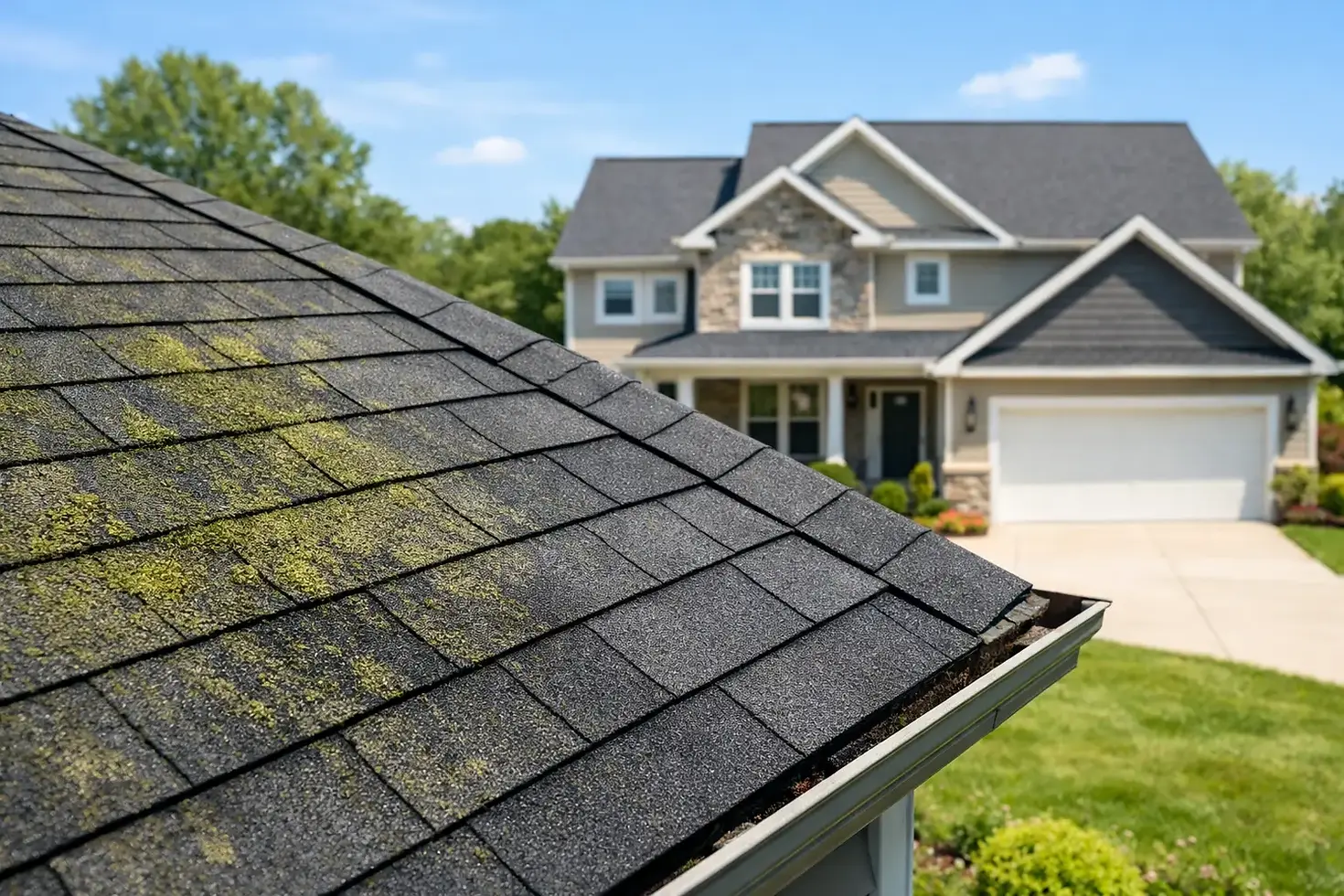
The dark staining seen on many asphalt roofs is commonly caused by blue-green algae, often identified as Gloeocapsa magma. It feeds on the limestone filler used in many shingles and leaves behind dark, streak-like stains. These marks usually appear first on roof slopes that receive less sun or stay damp longer.
Algae is not the same as moss, although the two can show up together. Algae creates dark discoloration. Moss is thicker, green, and more visible, and it can hold moisture directly against the shingle surface. Lichen can look pale green, gray, or white and often attaches more firmly. Each condition needs a different level of care.
Algae staining alone does not necessarily mean a roof is leaking or structurally failing. Still, leaving any biological growth in place year after year is not a good maintenance strategy. It traps the appearance of neglect, can contribute to moisture retention when combined with moss or debris, and makes it harder to see the real condition of the roof underneath.
Why Black Roof Streaks Should Not Be Ignored
A roof is exposed to sun, rain, salt air, tree debris, and changing temperatures every day. When algae settles in, the first impact is usually cosmetic. Dark streaks absorb more heat than a clean, reflective shingle surface, which may add unnecessary heat stress during hot weather. The larger concern comes when algae shares the roof with moss, lichen, clogged gutters, or branches that keep the surface wet.
Moss can lift shingle edges as it grows. That creates opportunities for water to sit where it does not belong and may make shingles more vulnerable during wind-driven rain. Thick growth can also hide cracked, missing, or worn shingles that should be identified before a small issue becomes a larger repair.
The trade-off is simple: not every streaked roof requires aggressive action, but waiting until growth is heavy limits the safe options. Early professional roof cleaning is generally easier on the roof and gives homeowners a clearer picture of its condition.
Coastal conditions make maintenance more valuable
In South Coast Massachusetts, homes near the water often deal with frequent moisture and slower drying times. A tree-lined property in South Dartmouth or Acushnet may have more shade than an open home in Somerset or Rochester. Cape Cod homes in Barnstable County face similar conditions, especially where pine needles, leaves, and ocean air collect on rooflines.
That does not mean every home needs the same schedule. The right timing depends on tree cover, roof direction, gutter performance, age of the shingles, and how quickly staining returns. A local, in-person assessment is more useful than treating every roof as if it has the same problem.
How to Tell Whether Your Roof Needs Attention
From the ground, look for changes that go beyond ordinary discoloration. Widespread black streaks, visible moss clumps, debris collecting in valleys, or dark patches beneath overhanging branches are all worth addressing. Check whether gutters are overflowing or whether downspouts are carrying water away from the foundation as intended. Roof growth and poor drainage often go hand in hand.
You should also watch for signs that require a closer professional inspection: loose or curling shingle edges, bare patches where granules appear missing, cracked shingles, or staining around roof penetrations. Cleaning can improve a roof's appearance and remove growth, but it cannot correct every aging or physical shingle issue. Honest recommendations should distinguish between a roof that needs maintenance and one that needs repair evaluation.
Avoid climbing onto the roof to investigate. Asphalt shingles can be damaged by foot traffic, and wet roofs are hazardous. A ground-level view, binoculars used safely from the yard, or a professional assessment is the better approach.
The Right Way to Clean Algae From Asphalt Shingles
Roof cleaning is not a pressure washing job. High pressure can remove protective granules, disturb shingle edges, force water under the roofing material, and shorten the life of a roof that was otherwise serviceable. The goal is to remove algae and organic growth while treating the shingles gently.
A proper soft-wash approach uses roof-appropriate cleaning solutions applied at controlled pressure. The solution is allowed to work on algae, moss, and staining without blasting the shingle surface. Heavier moss may need careful removal in stages, because scraping aggressively can damage the roof. Some staining can continue to fade after treatment as weather rinses away the remaining residue.
Protecting the property around the roof matters just as much as treating the roof itself. Landscaping should be pre-wet, monitored during the work, and rinsed thoroughly afterward. Gutters and downspouts should be considered so runoff is managed responsibly. A fast-looking result is not worth risking shrubs, flower beds, painted surfaces, or siding below.
South Coast Shingle Savers takes a restoration-first approach because homeowners deserve to know whether cleaning and preservation can help before they are pushed toward an unnecessary major expense. The right method is based on the roof's condition, the type of growth present, and the homeowner's long-term goals.
Can Roof Rejuvenation Help After Algae Cleaning?
Cleaning removes the biological staining and growth. Roof rejuvenation is a separate consideration that may help certain aging asphalt shingles restore flexibility and improve their appearance after the roof has been properly cleaned and evaluated. It is not a cure for missing shingles, active leaks, severe deterioration, or damaged roof decking.
For a roof that is weathered but still structurally sound, rejuvenation may be a practical way to support shingle performance and extend usable life. For a roof with substantial physical damage, a preservation treatment may not be appropriate. This is why a hands-on inspection and clear explanation matter more than a one-size-fits-all recommendation.
Homeowners preparing to sell often appreciate the visible difference a clean roof can make. Property managers and homeowner associations also benefit from a consistent maintenance plan, particularly across properties in Marion, Mattapoisett, Plymouth County, and the larger South Coast area. Cleaner rooflines improve the overall look of a neighborhood while helping managers address growth before it becomes widespread.
Preventing Algae From Returning Too Quickly
No cleaning method can promise that algae will never return, especially in a humid, tree-covered region. It can, however, be managed. Keeping gutters clear helps rainwater move away from the roofline. Removing leaf buildup from valleys reduces damp areas where growth starts. Trimming branches that heavily shade or rub against the roof can improve airflow and reduce debris.
Ventilation also deserves attention. A properly ventilated attic helps regulate heat and moisture beneath the roof, though it will not eliminate algae on its own. If roof staining returns often, the answer may be a combination of better drainage, reduced shade, periodic soft washing, and a maintenance schedule based on your home's actual conditions.
A clean roof does more than brighten curb appeal. It lets you see what you own, manage small concerns sooner, and make thoughtful decisions about preservation. If the streaks are spreading or moss is beginning to take hold, a careful evaluation now can protect both the shingles and the budget you planned around them.


Comments