
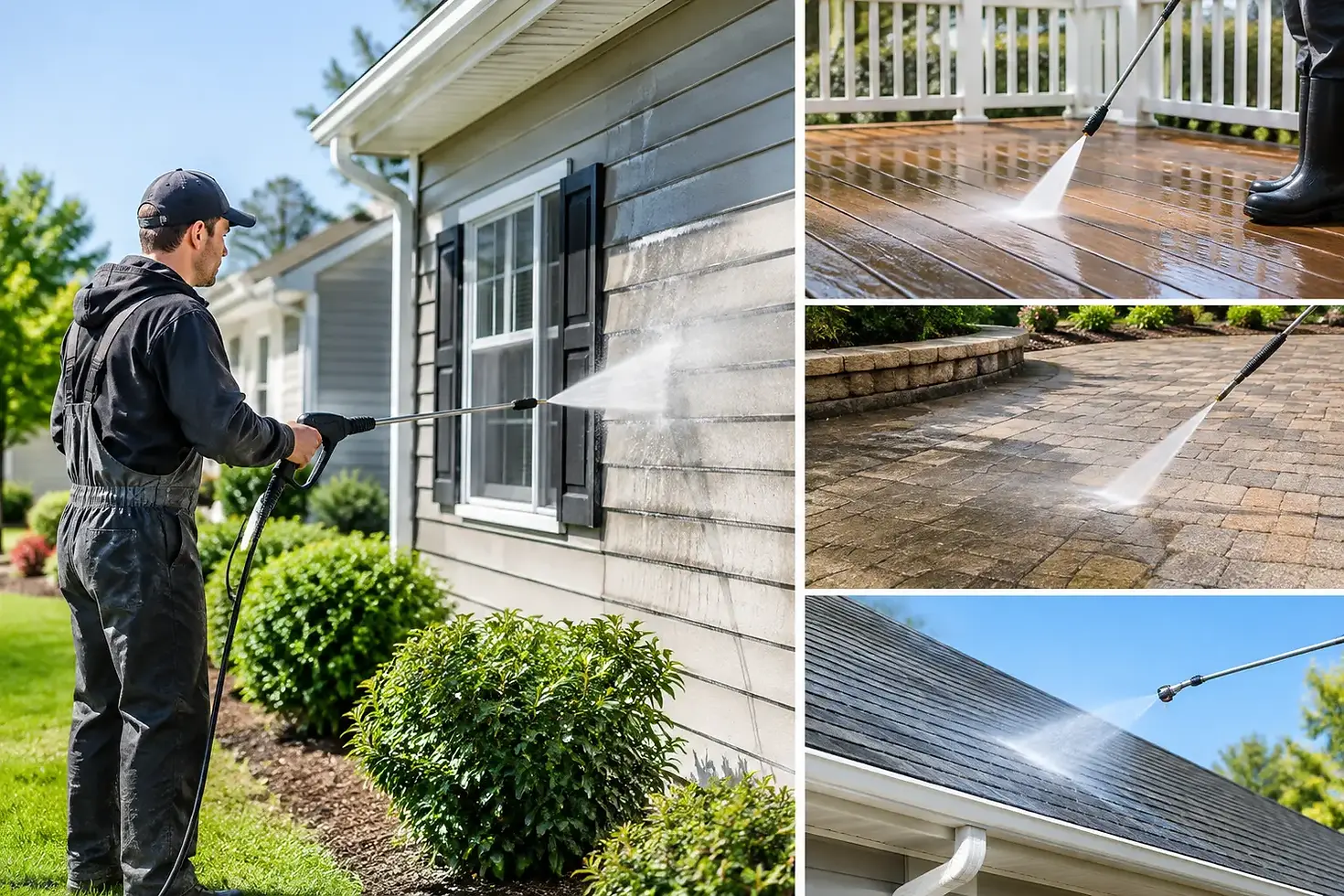
Best Surfaces for Pressure Washing Around Your Home

Updated: Nov 2
A dark, slippery driveway or a green-stained patio can make an otherwise well-kept home look neglected. The best surfaces for pressure washing are usually durable hard materials that can handle water force without cracking, splintering, or losing their finish. The key is matching the cleaning method to the material; not treating every outdoor surface the same.
For homeowners in South Coast Massachusetts, moisture, shade, salt air, tree cover, and seasonal debris can all leave exterior surfaces looking dirty faster than expected. Pressure washing can make a major visual difference in the right areas. However, if used on the wrong surface, it can etch concrete, scar wood, force water behind siding, or damage roof shingles.
What Makes a Surface Suitable for Pressure Washing?
Pressure washing works best on dense, stable surfaces where dirt, algae, mildew, and surface staining sit on top rather than deep inside the material. Concrete and many masonry surfaces are common examples. These materials can usually tolerate controlled pressure, proper equipment, and an appropriate cleaning solution.
Condition matters as much as material. A sound concrete walkway may clean up well, while an older slab with loose aggregate, failing joints, or flaking surface layers needs a more careful approach. The same goes for pavers, stone, and wood. We look at the surface before recommending a cleaning method because a clean result is not worth creating new damage.
Concrete Driveways, Walkways, and Patios
Concrete is one of the most reliable surfaces for pressure washing. Driveways, sidewalks, front walks, pool surrounds, and concrete patios often collect tire marks, mud, leaf stains, algae, and general grime. Cleaning can restore a lighter, more even appearance and improve traction where organic growth has made the surface slippery.
Even concrete needs the right technique. Excessive pressure held too close can leave visible lines or expose the rough aggregate beneath the top layer. This is especially true on older concrete or decorative finishes. A professional cleaning approach uses controlled pressure, even passes, and surface-appropriate treatment rather than trying to blast stains away in one spot.
Oil stains, rust marks, and deeply set discoloration may not disappear completely with pressure washing alone. Some stains need targeted treatment, and the final result depends on how long the stain has been present and whether it has penetrated the concrete.
When Concrete Needs Extra Care
Avoid aggressive cleaning if the concrete is crumbling, scaling, badly cracked, or already showing a weak surface layer. Pressure can worsen loose areas. Newer concrete also needs adequate cure time before any cleaning is considered. If you are unsure about the condition of a driveway or patio, an assessment before cleaning is the safer choice.
Brick, Pavers, and Some Stone Surfaces
Brick walkways, paver patios, and certain stone surfaces can often be cleaned effectively, but they require more judgment than plain concrete. Moss and algae can settle into joints, and accumulated dirt can make individual pavers look dull or unevenly colored.
A controlled wash can improve these areas, especially on patios and walkways where growth becomes slippery. The concern is the joint material. Too much pressure can dislodge sand between pavers or weaken older mortar joints in brickwork. After cleaning pavers, some joints may need to be refilled, depending on their condition and the method used.
Natural stone varies widely. Dense stone may tolerate washing well, while softer or layered stone can chip, flake, or lose its natural texture under too much force. We do not assume all stone should be cleaned the same way just because it looks similar from a distance.
Composite Decking and Durable Outdoor Surfaces
Many composite decks can be cleaned with low, carefully managed pressure. These materials often develop a film of pollen, dirt, mildew, or sunscreen residue, especially near pools and outdoor seating areas. Cleaning can bring back a more uniform appearance without the maintenance demands of bare wood.
Still, composite decking is not the same as concrete. High pressure or a narrow spray pattern can leave marks that are difficult to blend out. Manufacturer recommendations, the age of the deck, and the type of buildup should all guide the cleaning plan. In some cases, a gentler wash and appropriate cleaner are more useful than increasing pressure.
Other durable surfaces that may be suitable with the right method include:
Vinyl fencing with surface mildew or dirt buildup
Heavy-duty plastic outdoor furniture
Metal railings and certain painted exterior fixtures
Some pool decks and hardscape borders
These surfaces usually do not need the same pressure used for a driveway. The goal is to remove buildup while protecting finishes, seams, and nearby landscaping.
Surfaces That Should Not Be Pressure Washed Aggressively
Pressure washing is not a catch-all exterior cleaning service. Some parts of a home need a lower-pressure approach, a different cleaning solution, or no pressure washing at all.
House Siding Needs House Washing, Not High Pressure
House washing is one of the most useful ways to improve curb appeal and remove the algae, pollen, cobwebs, and grime that collect on siding. But high pressure is usually not the answer for siding. Water can be driven behind vinyl panels, into trim gaps, around window seals, or beneath loose paint.
A proper house wash uses a gentler method designed for exterior siding and trim. This approach is especially important on homes in Dartmouth, Westport, Fairhaven, and nearby coastal communities, where damp conditions and seasonal buildup can show up on shaded sides of the house.
Vinyl siding, painted wood, fiber cement, soffits, gutters, and exterior trim each need thoughtful treatment. We use the cleaning method that fits the surface instead of applying driveway-level pressure to the side of a home. That protects the exterior while still producing a noticeably cleaner result.
Asphalt Shingle Roofs Need Soft Washing
Never pressure wash an asphalt shingle roof. High pressure can remove protective granules, disturb shingles, and shorten the useful life of the roof. Dark streaks, moss, or algae on a roof may call for roof cleaning, but that is a separate service with a specialized low-pressure approach.
For qualifying aging asphalt shingle roofs, roof rejuvenation may also be worth discussing after the roof's condition has been evaluated. It is not a repair for leaks, structural issues, or failing shingles, and it is not right for every roof. Cleaning, maintenance, repair, or replacement may each be the more sensible path depending on what the roof needs.
Wood and Cedar Need a Restoration Mindset
Wood decks, cedar siding, fences, and railings can be damaged quickly by excessive pressure. A powerful stream can raise the grain, carve soft areas, create fuzzy fibers, and leave uneven stripes that become more visible once the wood dries.
Wood cleaning and restoration call for lower pressure, proper cleaning products, and patience. Sometimes the goal is to remove surface growth and prepare wood for its next maintenance step. Other times, weathering or failing coatings may limit how much improvement is possible without additional restoration work. The condition of the wood should lead the recommendation.
Signs It Is Time to Clean Hard Surfaces
You do not need to wait until a driveway looks black or a patio feels slick underfoot. Green or black growth, noticeable tire marks, muddy splashback, leaf stains, and uneven discoloration are all signs that an exterior hard surface could benefit from cleaning.
For many homeowners, spring is a practical time to address winter grime before outdoor use picks up. Fall can also make sense after leaves have dropped and before wet weather allows organic buildup to settle in. The right schedule depends on shade, tree cover, drainage, traffic, and how exposed the surface is to coastal moisture.
Why Method Matters More Than Maximum Pressure
The best pressure washing results come from using enough force to clean the surface, not the most force possible. Pressure level, spray tip, distance, cleaning solutions, water flow, and the operator's technique all affect the outcome. A driveway and a cedar fence may both look dirty, but they should never be treated as the same job.
Before cleaning, move vehicles, furniture, planters, and delicate items away from the work area. Close windows, keep pets inside, and point out any loose mortar, damaged siding, cracked concrete, or drainage concerns. These details help prevent surprises and make it easier to choose the right method from the start.
If you are deciding between pressure washing, house washing, roof cleaning, or wood restoration, start with the surface and its condition. South Coast Shingle Savers can help homeowners sort through those options and recommend the service that makes sense for the property—not simply the strongest wash available.
Conclusion: Trust the Experts for Your Home's Exterior
In conclusion, maintaining the exterior of your home is crucial for both aesthetics and longevity. Whether it's pressure washing your driveway or soft washing your roof, understanding the right methods and materials is essential. Trusting experts like South Coast Shingle Savers ensures that your home remains beautiful and well-protected. We are here to help you keep your home looking its best while ensuring it lasts for years to come.



Comments